


Maybe you’ve felt it for a while now: something inside you is shifting, but you’ve never really had the words to say it out loud. This piece gives you those words.
It speaks your inner world, aloud.
You might recognize this…
It’s a strange feeling when you realize you’re actually further along than your life reflects.
You notice things faster. You feel more deeply than you can explain.
You understand what’s happening beneath the surface — but you don’t (yet) have the language, the place, or the context to let it exist.
So you keep it to yourself. You dim your intensity. You stay smaller than you really are.
Until one day it doesn’t fit anymore.
As if your old life has become one size too small.
That’s the transitional space this story is about — a space so many people are in, even though almost no one has ever named it.
What I discovered (and what you’ll probably recognize)
My work really revolves around one question:
How do you step into the world without losing yourself?
I saw many people — often deep feelers, fast thinkers, intense, gifted — getting stuck in a kind of no‑man’s‑land:
your old role no longer works
the new one is already there, but still without form
you feel you’re meant to contribute, but have no idea where to begin
The problem isn’t that you’re “too much.”
The problem is that you never had a place where your way of being actually fits.
Berlin showed me what you might already feel
When I went to Berlin, I wasn’t looking for a city.
I was looking for space.
And Berlin is space.
Not as a destination, but as a transitional field.
It’s a place where identity becomes fluid,
where old forms fall away before new ones appear,
where you can lose yourself without being lost.
Something simple but essential happened there:
I realized my inner movement wasn’t unique.
It was recognizable, shareable — and needed.
What I had carried quietly for years was asking for a public form.
How that became NEXUS
NEXUS didn’t start as a plan — it emerged as recognition.
The idea had been living in me for years (in us, really, because I’m building this together with Wout van Helvoirt) — vague, under the surface, without language. Berlin didn’t create it; Berlin revealed it.
Not as a concept, but as a reality: There needs to be a space for people in this transition. A field where intensity isn’t strange but useful.
Where you don’t have to fit in — you get to show up.
That’s why NEXUS isn’t an organization.
It’s a junction.
A homecoming.
Not for my story, but for yours.
My “method” (or whatever comes closest)
No statistics.
No theories.
No models.
My method is simple:
listening to what people keep silent
sensing what they can’t place themselves
giving language to what has no form yet
building a bridge between inner life and public life
And the result?
People suddenly recognize themselves.
They no longer have to explain who they are.
They realize they’re not alone in this in‑between space.
They find direction.
They find words.
That’s what NEXUS does.
And meanwhile, something else is happening…
Outside of NEXUS, my life is made of ordinary, tangible things.
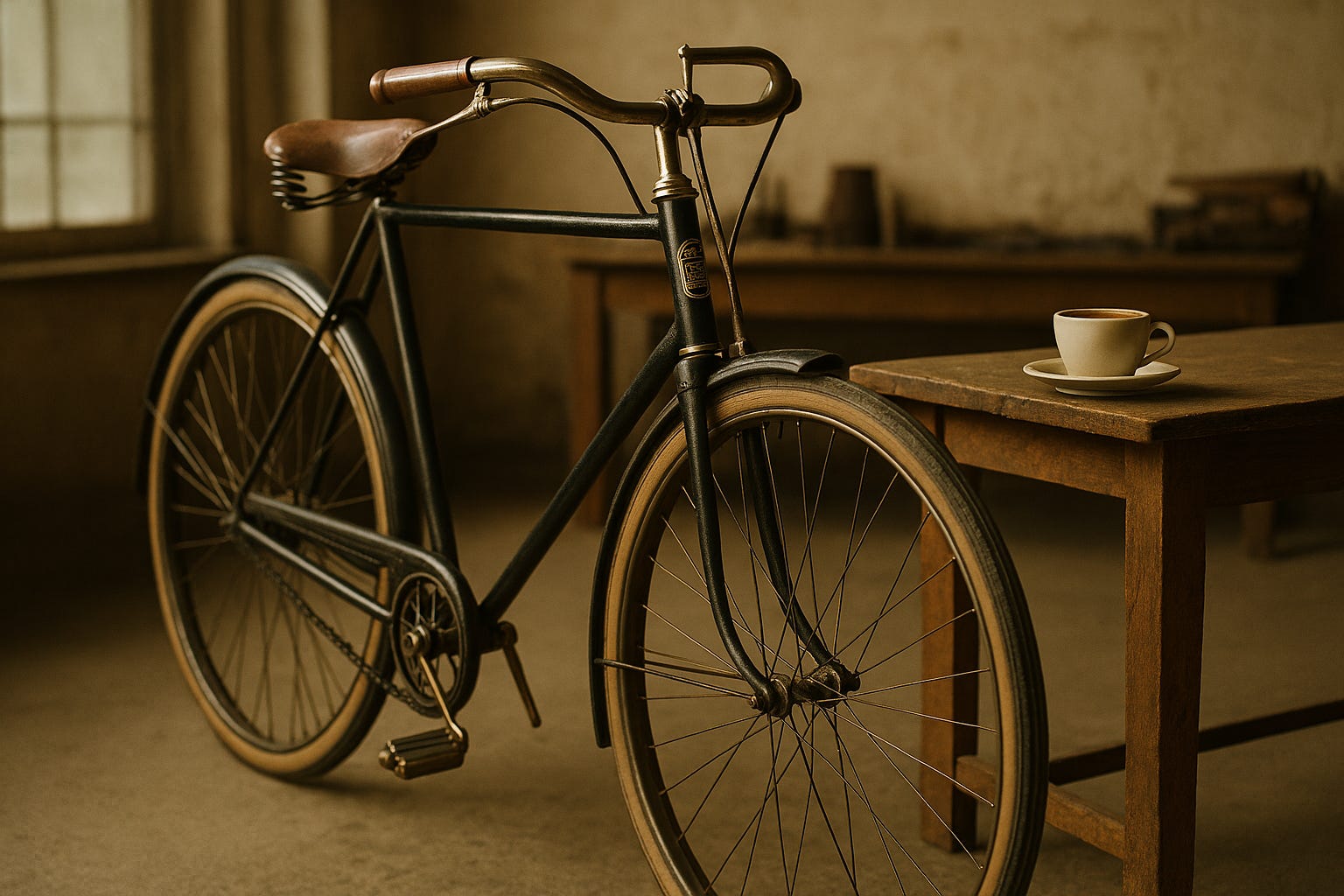
We make coffee as baristas. We sell a unique handmade Norwegian bicycle — built since 1926, Classic & Retro, a brand with its own soul —
and I’m about to start repairing bikes again myself.
The funny thing is: it’s often in those simple, almost craft‑like moments that the best conversations happen. Maybe you and I will one day find ourselves standing next to an upside‑down bicycle, a cup of coffee on the table…
and you’ll say something you’ve never dared to say out loud before.
Because sometimes a real conversation doesn’t need an office. Just two people, a bike, and a door that quietly opens.
The closing
You don’t have to wait until you understand everything.
You don’t have to make yourself smaller.
You don’t have to keep your intensity inside.
You’re not standing still — you’re at the beginning.
You’re not an exception.
You’re a beginning.
Nice