


Throughout this piece, I use the term “high-bandwidth Mavericks” and similar. If you’re more familiar with the language of giftedness or gifted individuals, you can mentally substitute that framing here. I don’t find the label myself accurate, but the underlying experience overlaps more than the terminology suggests.
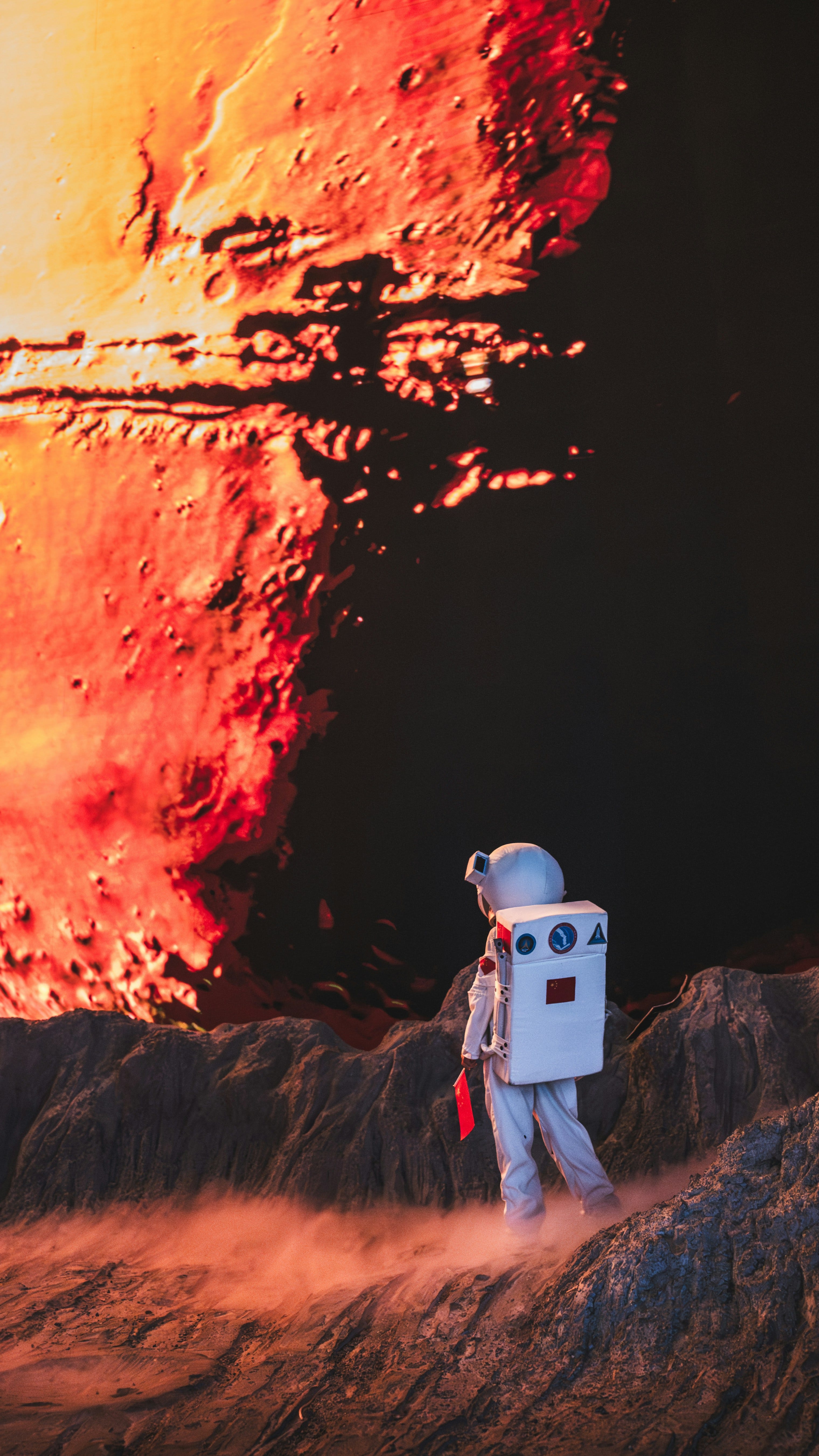
There’s something oddly familiar about the framing of NASA’s ongoing Artemis II moon mission. The websites, press releases, and news segments relentlessly emphasize the connection to the Apollo program some 50 years ago, creating a sense of history and grandeur. But if you take a step back it becomes rather difficult to ignore the physical and emotional detachment of the modern-day youth (myself included) to both this, and the original, programs. Seeing past the detachment, the repeated emphasis itself becomes the signal: if this return to the moon were genuinely groundbreaking, and would require our utmost attention, would it really need to be framed so heavily against past accomplishments? Isn’t it able to stand on its own weight? If not, why not?
This starts to look an awful lot like a case of the overemphasis pattern. When something is repeated, hyped, or framed as monumental, over and over again, it signals that attention is being directed somewhere else. It’s the same principle as the classic “monkey in the room” experiment—you’re instructed to focus on one thing so intensely that you fail to see what’s happening right in front of you. Artemis II, with all its press hype, looks suspiciously like yet another textbook American example. The more they stress the past landing, the more it draws focus away from the fact that this mission is 1.) largely symbolic in hindsight and 2.) extremely expensive for the tax payer. Especially when considering the turbulent times where in.
Why am I mentioning this? Well, the pattern is everywhere once you start looking. Movies today constantly recycle the same stories, reboots and sequels leaning on past successes instead of creating something new. The Hobbit trilogy for example, made after Lord of the Rings (one of my own favorites), never reached the same impact, yet it relied heavily on the original’s reputation to over-hype and sell it’s cinema tickets. Similarly, products like Coca-Cola Zero or Pepsi Max are marketed as better “sugar-free” alternatives, but the over-marketing conveniently masks a much less healthy reality. Apple, like all other tech conglomerates, follows the same script with its iPhones: each new release is bloody “amazing,” while the last one is suddenly obsolete, only for the cycle to repeat the next year. Overemphasis within these capitalistic contexts (which everything eventually is, NASA included) is a structural clue that something is being hidden from you.
Looking closer at Artemis II, the messaging starts to feel almost absurd. The repeated references to the 50-year-old landing make it seem as if we’ve never been to the moon, and now this flyby is supposed to be some monumental “first.” Headlines stress how humans are “returning to the moon”, as if these feats have supposedly never been accomplished. And yet, remember, there’s no landing with this mission, no real step forward—“just” orbiting around the same celestial body. The pattern is obvious: overemphasis is being used as a distraction, a way to control attention and frame a narrative that doesn’t match the substance of the mission.
This raises larger questions. Why spend billions of taxpayer dollars on a flyby that contributes little tangible progress, here on earth, especially when real-world crises—pandemic recovery from COVID “side-effects,” artificially induced economic instabilities through war conflicts and food scarcity, destruction of wildlife and habitat, artificial “intelligence” and societal dumb-down—are made to look underfunded or unresolved? Perhaps it’s just a BS morale boost, like the Apollo 11 mission originally intended to do in conjunction with the Russians, a symbolic gesture meant to give people something “inspiring” to latch onto. Or maybe it’s a way to test public attention, for the millionth time that is, to prime the population for bigger revelations or distractions. Regardless of intention, the structural pattern is consistent: repeated emphasis signals that the audience is being (mis)guided to focus on something specific, something rather meaningless, often at the expense of deeper scrutiny where it’s truly needed.
Recognizing this pattern is exactly what high-bandwidth Mavericks do best. Noticing what the large majority of people miss: the constant repetition, the framing, and the hype. This isn’t cynicism—it’s orientation, a wakeup call. The overemphasis pattern shows up in entertainment, marketing, technology, government messaging, everything, and it always points to the same underlying principle: what is repeatedly highlighted is rarely the real signal. Paying attention to what is overemphasized, and asking yourself why this is the case, is how true Mavericks navigate the noise without being trapped by it, and the reason why, from one day to another, they just disappear entirely from sight without anyone else noticing.
Ultimately, Artemis II isn’t just “another” moon mission. For high-bandwidth observers here, it’s one out of many case studies in how messaging and hype operate on the masses. The lessons apply broadly: marketing, media, products, even politics and personal relationships. When you notice the repetition, the constant framing, the endless comparisons to the past, to overcompensate for something that’s missing, you start to see the underlying structure. And once you do, you have the potential to stop getting distracted by the spectacle—you can focus on the substance, and on what’s really happening behind the scenes.
For more information on NEXUS, the NEXUS Werkstatt in Berlin, our 1:1 sessions, transmissions, books and other items, please visit our website nexuswerkstatt.com, or reach out directly.
Most people think repetition confirms importance. It rarely does.
What you’re pointing at is structural: when something needs constant framing, it’s compensating for a lack of intrinsic weight.
Apollo doesn’t make Artemis stronger. If anything, it exposes the dependency.
You see the exact same pattern in media narratives.
Take the ongoing framing of “extreme right” as the dominant threat — repeated so often that it starts to feel self-evident.
Yet when you look at the underlying data, the proportions don’t match the intensity of the messaging.
That gap is the signal.
The real question is never what is being emphasized — but why it needs that level of emphasis to hold attention.
That’s where perception shifts from consuming narrative to seeing the mechanism behind it.
And once you see it, you can’t unsee it.
Sputnik galvanized us into space. The Chinese intention to claim the moon as its property has NASA humping past Musk to demonstrate independent national pride and power.