


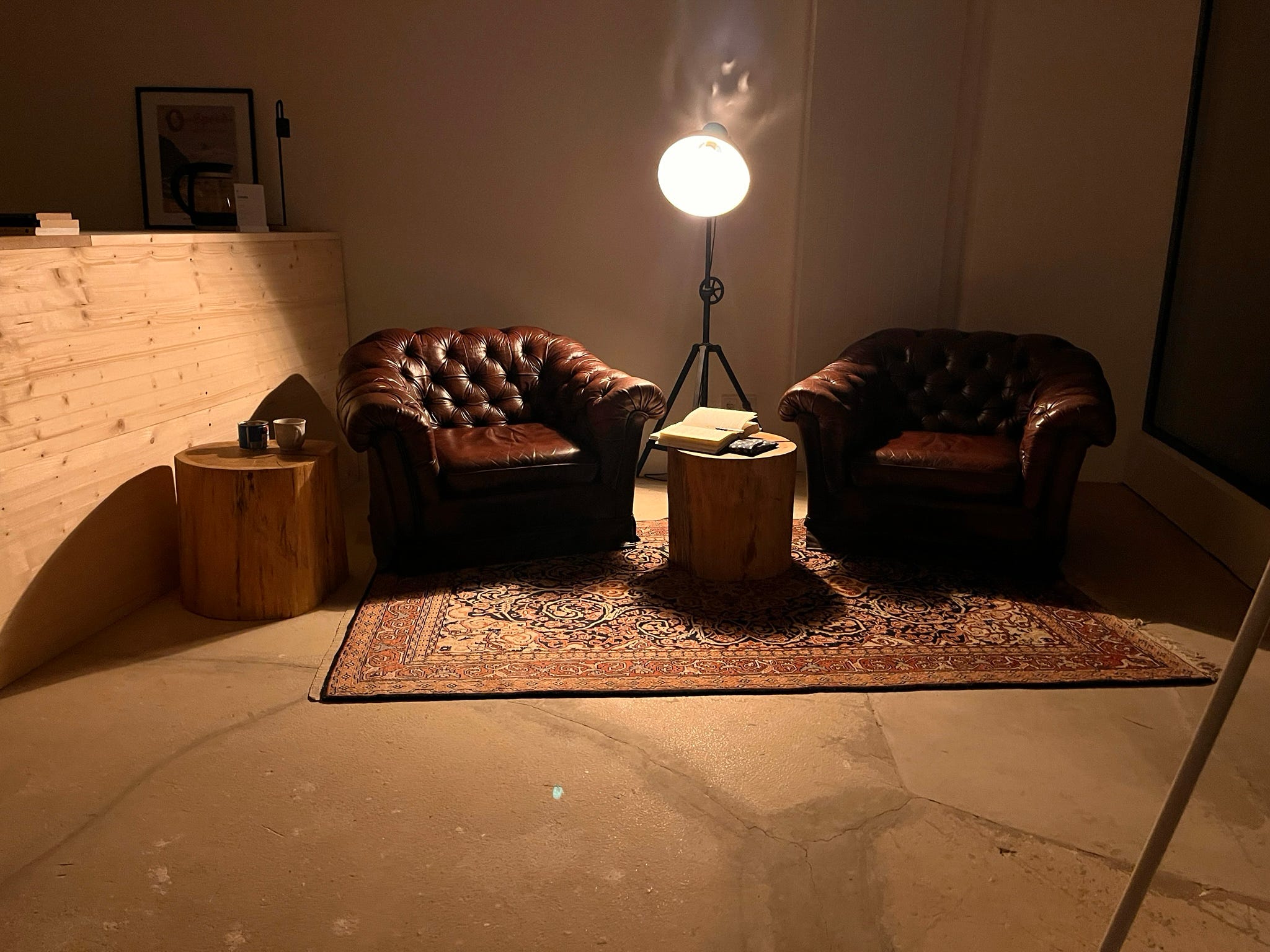
Three weeks in Berlin, building something new. Away from home longer than I’ve ever been.
Somewhere in the third week, a question showed up that had nothing to do with NEXUS.
Why am I here. Not practically — I know why practically. But underneath that. What is the point of any of this.
The strange part is that everything is going well. Real conversations, real trust, a concept proving itself as it goes. None of that touches the question.
Success, even complete success, doesn’t seem to answer it.
Underneath that was something else. Not loneliness in the sense of missing people — I miss them plenty. Closer to: nobody can fully experience my life from the inside. Not even the people closest to me. That’s not a complaint. It’s just true, and I’d mostly managed not to look at it directly before.
There was a moment — quiet, almost peaceful — that came and went: “It’s fine as it is.”
And right behind it, something closer to fear. Not fear of the thought. Fear of what it would sound like out loud.
I think most people who feel things deeply know this exact sequence. A moment of real peace, followed immediately by the instinct to hide it, because peace with impermanence and wanting to disappear get read as the same thing by almost everyone around you. They’re not. But the fear of being misread is often enough to keep the sentence unsaid — for some people, permanently.
That’s the actual loss. Not the thought. The silence that grows around it.
There’s a word for the feeling underneath all of it that doesn’t translate cleanly: heimwee. Not for a place. Not for the past. For something under the everyday that I can’t quite name.
I’ve watched people — myself included — reach for an explanation the second something like this surfaces. A new goal. A diagnosis. A reframe. Better habits. As if the experience is a problem to solve rather than something that simply deserves to be heard without flinching.
I don’t think it needs solving. I think it needs recognising.
At 61, heading into 62, the questions change. Not “what will I achieve” but “what’s actually left when I put the roles down.” Who am I without the responsibilities and the results.
I don’t have a tidy answer. I’m not sure there is one.
What I do know: most people carrying real responsibility, who’ve built things, who function well from the outside — they know a version of this. They rarely say it out loud, not because they’re unhappy, but because the moment they do, the room usually can’t hold it.
I keep thinking about what it would mean to sit in a room that could.
Berlin, 20–21 August.
What I really don’t understand about Substack, that many subscribers view my article(s) but don’t give a like or comment. What the f*ck is the reason why you subscribe in the first please?